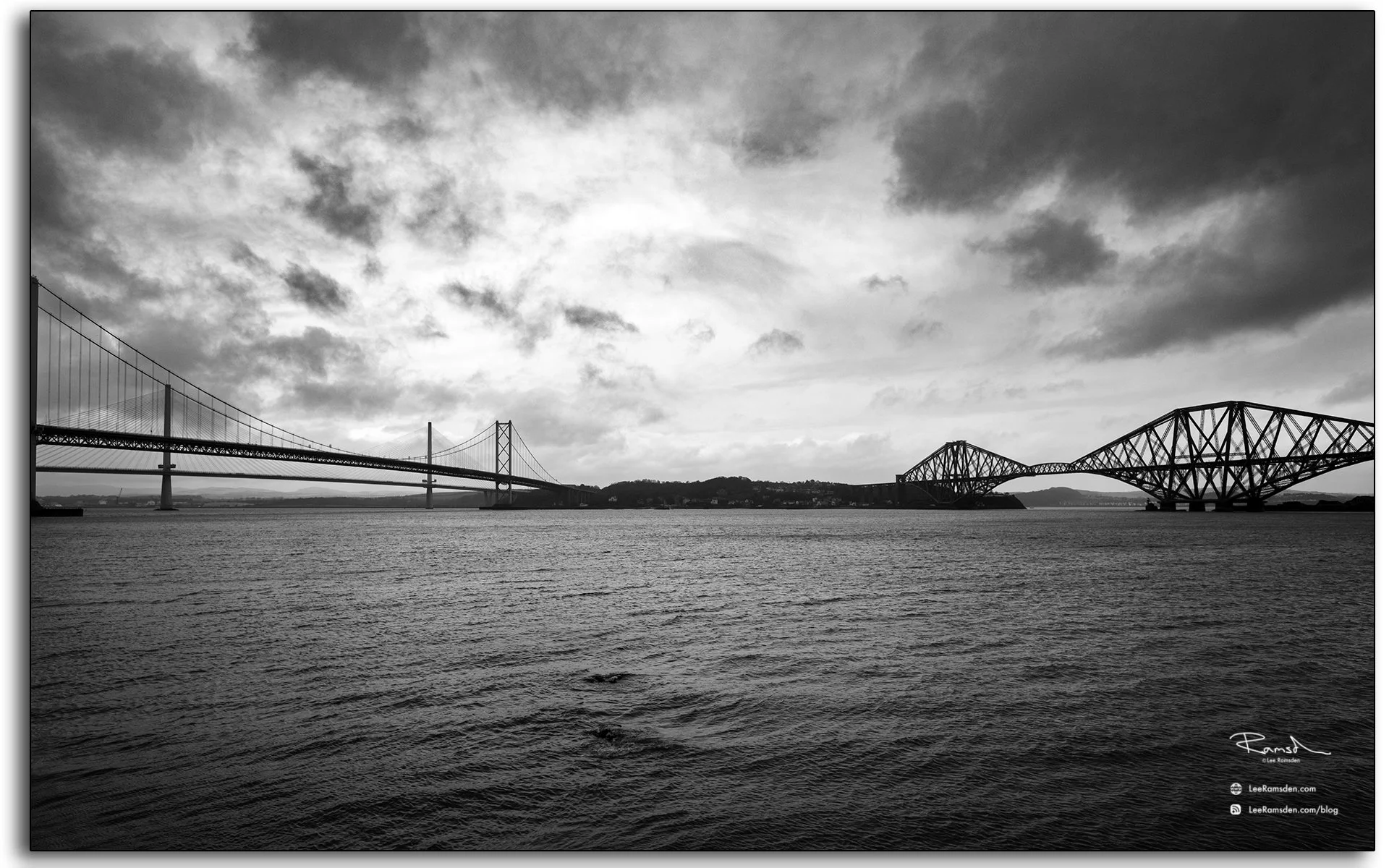
These photographs look across one of the most recognisable stretches of water in Scotland, where three major bridges now span the Firth of Forth side by side. In black and white, the shapes and lines do more of the talking. The steelwork, the suspension cables and the newer tower forms all stand out more clearly when the colour is stripped away.
What makes this location different from most bridge viewpoints is that it shows three separate eras of engineering in the same frame. The Forth Bridge opened in 1890 as a railway bridge and remains one of Scotland’s best-known structures. It is around 2.5 km long, rises to about 110 metres, and was inscribed as a UNESCO World Heritage Site for its importance in engineering history.
The railway bridge people usually think of first is only one part of the story now. Beside it sits the Forth Road Bridge, opened in 1964, a suspension bridge with a 1,006 metre main span that was, at the time, the longest suspension bridge outside the United States. In total it stretches for more than 2.5 km.
The newest crossing is the Queensferry Crossing, opened to traffic in 2017. It is a 2.7 km three-tower cable-stayed bridge and is described by official project sources as the longest three-tower cable-stayed bridge in the world.
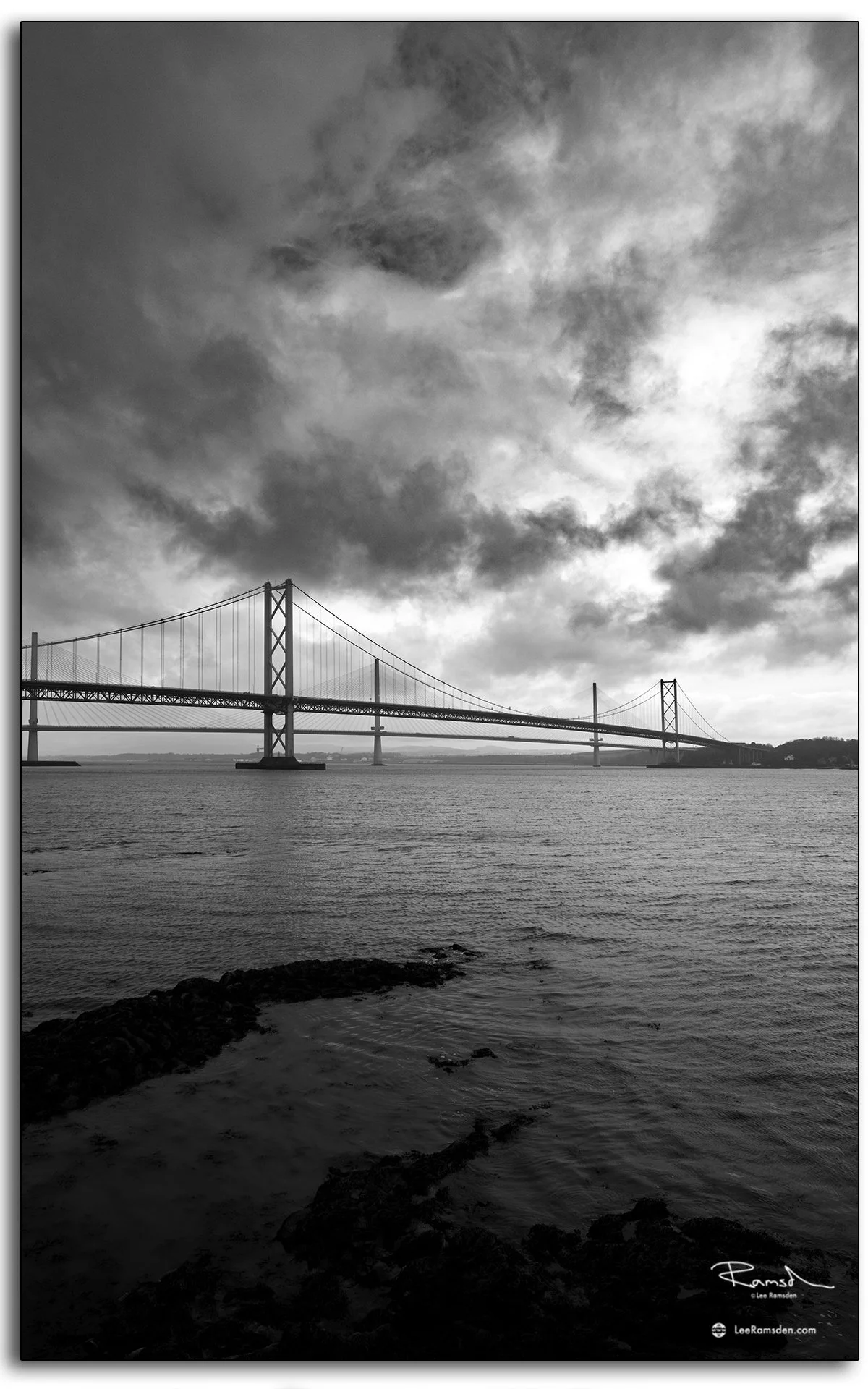
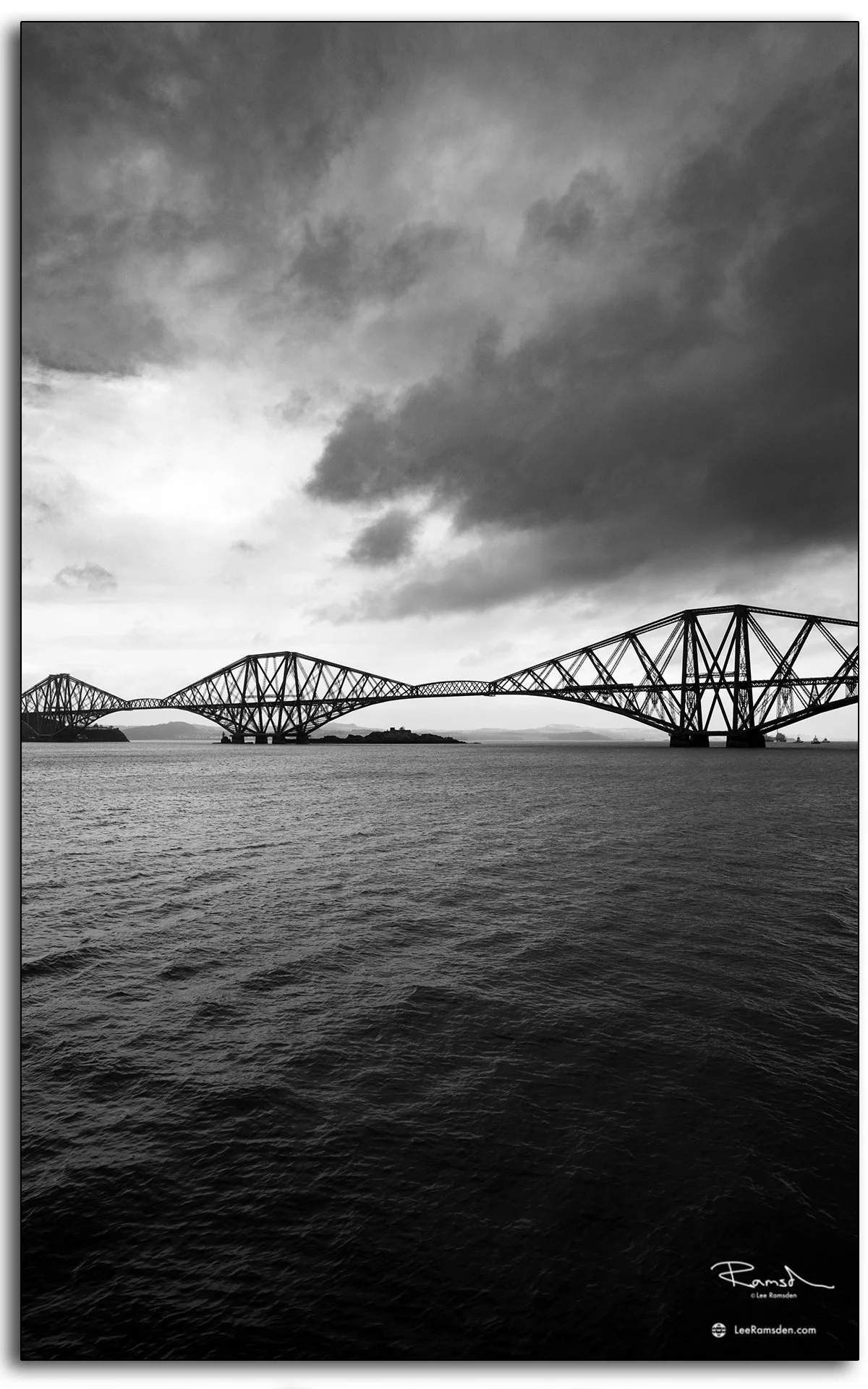
Photographically, black and white suited this set because it emphasises the structural difference between the bridges. The heavy cantilever steel of the Forth Bridge looks very different from the finer lines of the suspension bridge, and different again from the cleaner modern profile of the Queensferry Crossing. The cloud cover helped as well. It gives the frames a bit more weight without distracting from the bridges themselves.
This is one of those places where the location matters as much as the subject. You are not just looking at a single landmark, but at more than a century of Scottish engineering across one estuary.